How to Dress for a Creative Industry Job Interview
How to Dress for a Creative Industry Job Interview: Finding the Perfect Balance Between Professional and Expressive
Table of Contents
1. Understanding Creative Industry Dress Codes
2. Research Your Target Company Culture
3. Building Your Creative Interview Wardrobe
4. Industry-Specific Styling Tips
5. Accessories That Make a Statement
6. What to Avoid in Creative Industry Interviews
7. Final Touches and Confidence Boosters
8. FAQs
Walking into a creative industry job interview can feel like navigating uncharted territory. Unlike traditional corporate environments where a navy suit and conservative tie are the safe bet, creative fields encourage – and often expect – candidates to showcase their personality through their appearance. But here’s the million-dollar question: how do you strike that delicate balance between looking professional enough to be taken seriously and creative enough to fit in? 🎨
I remember my first interview at a design agency years ago. I spent hours agonizing over whether my vintage blazer was too bold or if my colorful statement necklace would send the wrong message. The truth is, dressing for creative industry interviews requires a nuanced understanding of both professional standards and industry expectations.
Understanding Creative Industry Dress Codes
Creative industries operate on a different wavelength when it comes to professional attire. While investment banks might frown upon anything that deviates from their strict dress code, creative fields like advertising, design, media, and entertainment actually value self-expression as a professional asset.
The key is understanding that “creative” doesn’t mean “anything goes.” Instead, think of it as “elevated casual with intentional choices.” Your outfit should tell a story about who you are as a creative professional while demonstrating that you understand workplace appropriateness.
Most creative companies fall somewhere on the spectrum between “creative casual” and “creative professional.” The former might welcome ripped jeans and graphic tees, while the latter expects polished looks with creative twists. Your job is to figure out where your target company sits on this spectrum.
Research Your Target Company Culture
Before you even think about what to wear, become a detective. Start by thoroughly exploring the company’s website, social media accounts, and any behind-the-scenes content they share. Look for team photos, office tours, or employee spotlights that give you glimpses into their daily dress culture.
LinkedIn can be your best friend here. Check out current employees’ profile photos and posts to get a sense of how they present themselves professionally. Are they wearing suits with quirky accessories? Casual attire with elevated pieces? This research will give you invaluable insights.
Don’t forget to consider the company’s client base too. A creative agency that works with Fortune 500 companies might lean more conservative than one that specializes in startups or entertainment clients. The external relationships often influence internal culture more than you’d expect.
If possible, try to visit the office beforehand – maybe grab coffee from a nearby café and observe the foot traffic. This real-world reconnaissance can provide context that online research might miss.
Building Your Creative Interview Wardrobe
Now comes the fun part – putting together an outfit that screams “hire me” in the best possible way. Start with a foundation of well-fitted, quality basics, then layer in elements that showcase your creative sensibility.
For bottoms, consider dark jeans (if the company culture supports it), tailored trousers, or a sleek skirt. The key is ensuring whatever you choose fits impeccably. Ill-fitting clothes will undermine even the most creative styling choices.
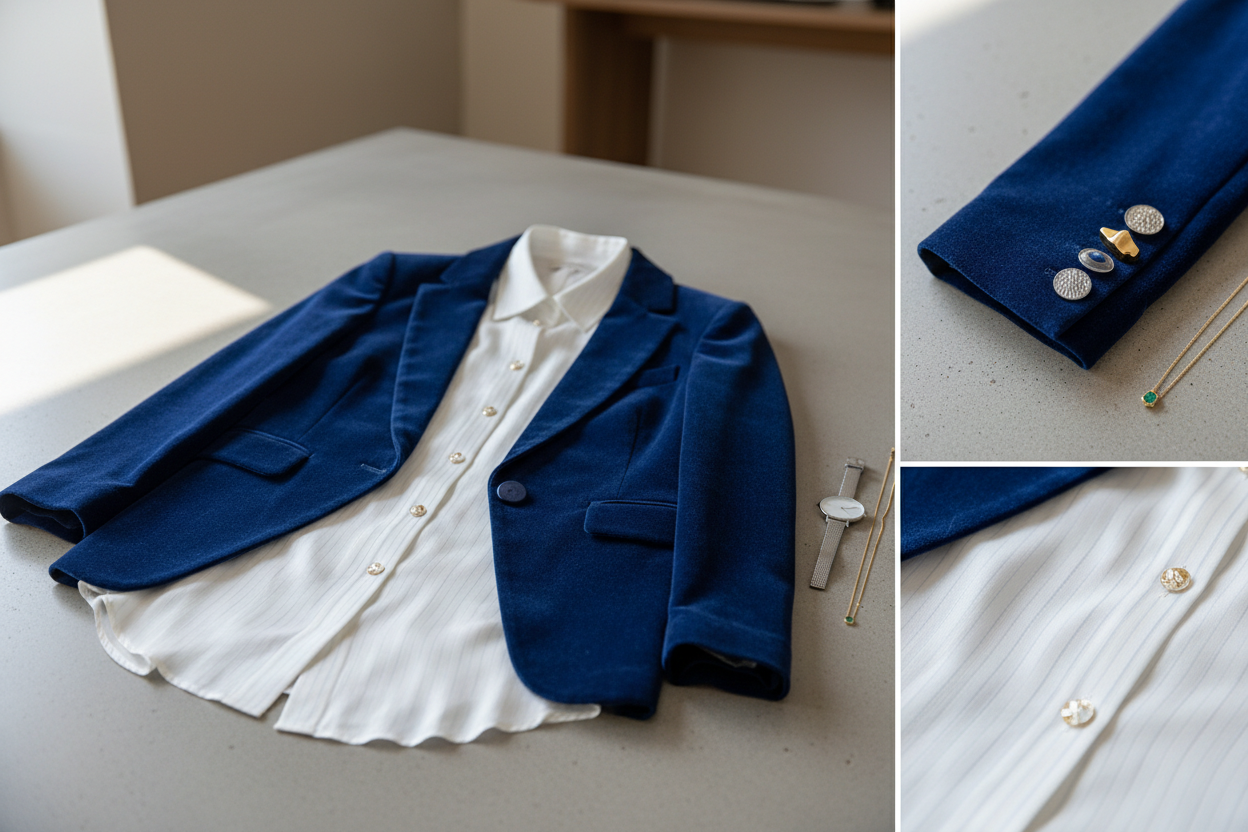
Your top is where you can really start to express personality. A crisp white shirt can be elevated with interesting textures, subtle patterns, or unique details like interesting buttons or an asymmetrical hem. Blazers are fantastic for creative interviews because they instantly add professionalism while offering endless opportunities for personal expression through color, texture, or cut.
Don’t underestimate the power of layering. A simple outfit can become interview-worthy with the right cardigan, vest, or light jacket. These pieces also give you flexibility – you can adjust your look based on the office vibe when you arrive.
Industry-Specific Styling Tips
Different creative industries have their own unwritten style rules, and understanding these nuances can give you a significant advantage.
In advertising and marketing, polished creativity is the name of the game. Think structured pieces with interesting details – a well-tailored blazer in an unexpected color, or classic trousers paired with a shirt featuring subtle geometric patterns. These industries often work with diverse clients, so your look should demonstrate versatility.
Design fields, whether graphic, interior, or fashion, typically embrace more artistic expression. Here, you might incorporate stronger colors, more dramatic silhouettes, or pieces that showcase your understanding of current design trends. However, remember that your outfit shouldn’t compete with your portfolio – it should complement it.
Media and entertainment industries often skew more casual, but that doesn’t mean sloppy. Think elevated streetwear, vintage pieces with modern twists, or contemporary basics styled in unexpected ways. The goal is to look like you belong in a creative environment while still respecting the interview setting.
Tech companies with creative departments usually appreciate clean, modern aesthetics. Minimalist pieces with interesting cuts, quality basics in contemporary colors, or subtle tech-wear influences can work well here.
Accessories That Make a Statement
Accessories are your secret weapon in creative industry interviews. They’re the easiest way to inject personality into an otherwise conservative outfit, and they often become conversation starters that can break the ice with interviewers. 💼
A unique watch, interesting eyewear, or a statement bag can speak volumes about your aesthetic sensibilities. Just remember the golden rule: if you’re wearing one bold accessory, keep the others more subdued to avoid overwhelming your look.
Jewelry offers endless opportunities for personal expression. Whether it’s vintage pieces that hint at your appreciation for design history, modern minimalist items that suggest clean aesthetic preferences, or handcrafted pieces that show support for artisanal work, your choices communicate your values and interests.
Shoes deserve special attention because they’re often the first and last thing people notice about your outfit. Creative industries generally offer more flexibility here – you might choose sleek sneakers, interesting boots, or classic shoes in unexpected colors or materials.
Don’t forget about bags and portfolios. In creative fields, these aren’t just functional items – they’re extensions of your personal brand. A well-chosen bag can reinforce your aesthetic while serving the practical purpose of carrying your work samples and interview materials.
What to Avoid in Creative Industry Interviews
Even in creative fields, certain choices can work against you. Overly revealing clothing, regardless of how fashionable, can shift focus away from your qualifications. Similarly, clothes that are wrinkled, stained, or obviously worn can suggest a lack of attention to detail – a crucial skill in most creative roles.
Avoid anything that might be considered controversial or potentially offensive. While creative industries are generally more open-minded, an interview isn’t the place to make political statements or push boundaries that might make interviewers uncomfortable.
Be cautious with overly trendy pieces that might date quickly. You want to appear current and style-conscious, but not like you’re chasing every fleeting trend. Timeless pieces with contemporary twists usually work better than anything too of-the-moment.
Strong fragrances can be problematic in any interview setting, but especially in creative environments where people might be sensitive to scents due to close collaborative work. Keep it subtle or skip it entirely.
Final Touches and Confidence Boosters
The night before your interview, do a complete dress rehearsal. Put on your entire outfit, including shoes and accessories, and check yourself from all angles. Make sure you can move comfortably, sit without tugging at clothes, and that everything stays in place.
Pay attention to grooming details that complement your creative aesthetic. Whether that’s a bold lip color that coordinates with your outfit, a fresh haircut that frames your face well, or simply ensuring your nails are clean and well-maintained, these details matter more than you might think.
Consider the practical aspects of your interview day. Will you be walking far? Sitting for extended periods? Potentially touring the office? Your outfit should support all these activities while maintaining its polished appearance.
Most importantly, choose pieces that make you feel confident and authentically yourself. When you feel good in what you’re wearing, it shows in your posture, your smile, and your overall presence. That confidence is often what interviewers remember most. ✨
Conclusion
Dressing for a creative industry interview doesn’t have to be a source of stress. By researching your target company, understanding industry norms, and choosing pieces that reflect both professionalism and personality, you can create a look that opens doors and starts conversations.
Remember, your outfit is just one element of your interview presentation, but it’s often the first impression you’ll make. Use it as an opportunity to demonstrate the same creativity, attention to detail, and understanding of audience that you’ll bring to the role.
The perfect creative industry interview outfit exists at the intersection of professional polish and personal expression. Find that sweet spot, wear it with confidence, and let your unique creative voice shine through every carefully chosen detail.
Frequently Asked Questions
Q: Can I wear jeans to a creative industry interview?
A: It depends on the specific company culture. Dark, well-fitted jeans paired with polished tops and accessories can work for some creative roles, especially in more casual environments like startups or design studios. However, when in doubt, opt for tailored trousers or chinos as a safer choice.
Q: How much should I spend on an interview outfit for a creative role?
A: You don’t need to break the bank. Focus on fit and quality over expensive brands. A few well-chosen pieces from affordable retailers, styled thoughtfully, can be more effective than one expensive item paired with obviously cheap accessories.
Q: Should I match my outfit to my portfolio aesthetic?
A: While your personal style should be consistent, your outfit shouldn’t compete with your portfolio for attention. Think complementary rather than matching – your appearance should enhance your work presentation, not distract from it.
Q: Is it okay to ask about dress code during the interview process?
A: Absolutely! When scheduling your interview, it’s perfectly appropriate to ask about dress expectations. Most recruiters appreciate candidates who want to make a good impression and will gladly provide guidance.
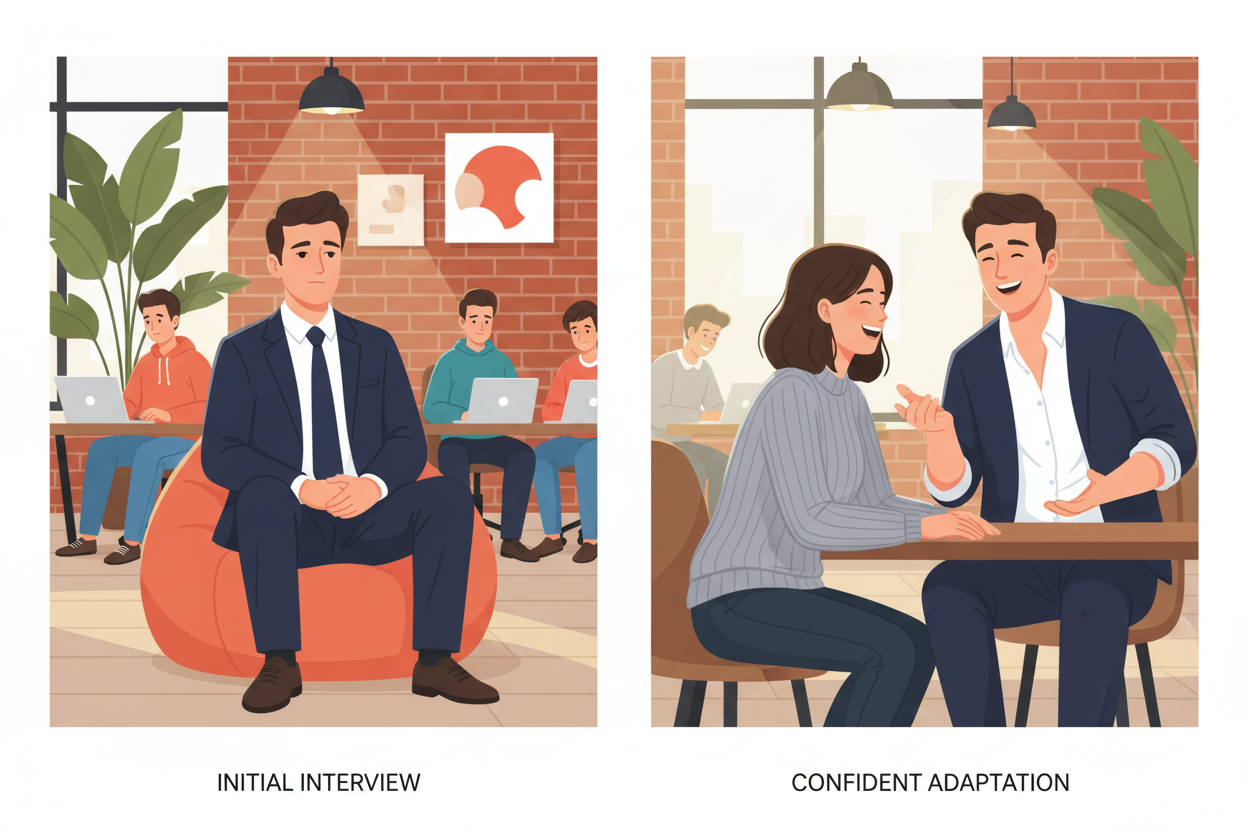
Q: What if I overdress or underdress for the interview?
A: Don’t panic. If you realize you’ve misjudged the dress code upon arrival, focus on your confidence and qualifications. A brief, gracious comment like “I can see the office has a more relaxed dress culture than I anticipated – I love that!” shows adaptability and social awareness.