
How to Dress for Different Climates and Regions
How to Dress for Different Climates and Regions: Your Complete Style Guide 🌍
Table of Contents
• Understanding Climate-Appropriate Dressing
• Tropical and Humid Climates 🌴
• Cold and Winter Regions ❄️
• Desert and Arid Climates 🏜️
• Temperate and Seasonal Zones 🍂
• Coastal and Windy Areas 🌊
• Urban vs. Rural Considerations 🏙️
• Essential Wardrobe Pieces for Climate Adaptation
• Cultural Sensitivity in Climate Dressing
• Frequently Asked Questions
Traveling the world or moving to a new region? One of the biggest challenges you’ll face isn’t navigating foreign customs or learning new languages—it’s figuring out what to wear! I learned this the hard way during my first trip to Southeast Asia, when I packed nothing but jeans and cotton t-shirts for what turned out to be the most humid month of the year. Let’s just say it wasn’t my most comfortable vacation.
Dressing appropriately for different climates isn’t just about comfort; it’s about health, cultural respect, and making the most of your experience wherever you go. Whether you’re planning a business trip to Stockholm in winter or a beach vacation in Thailand, understanding how to adapt your wardrobe to local conditions will make all the difference in your journey.
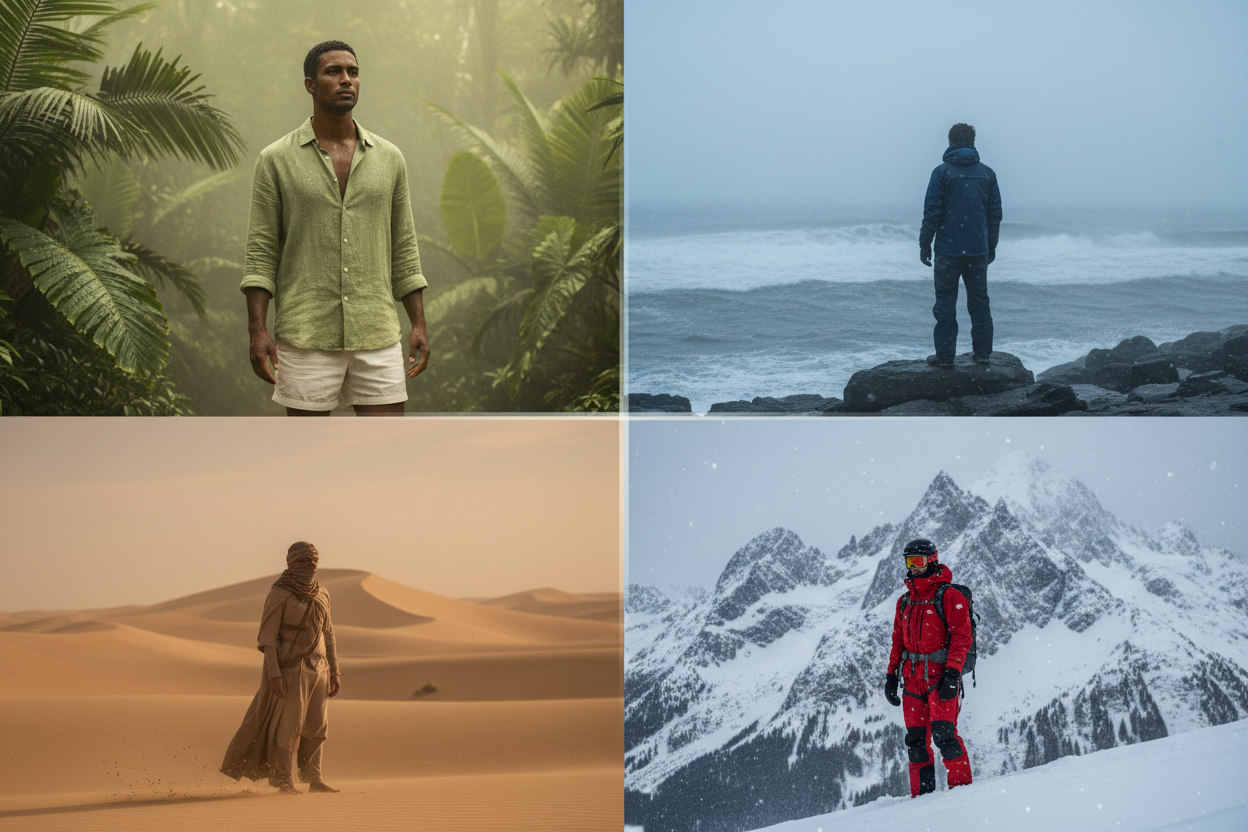
Understanding Climate-Appropriate Dressing 🌡️
Before diving into specific regional recommendations, it’s crucial to understand the science behind climate-appropriate clothing. Your body naturally regulates temperature through sweating and heat retention, but the right clothing can either support or hinder this process dramatically.
Fabric choice plays the starring role in climate adaptation. Natural fibers like cotton and linen excel in hot, dry conditions because they’re breathable and absorb moisture. However, in humid climates, synthetic moisture-wicking fabrics often perform better because they don’t retain water the way cotton does. For cold climates, wool remains unbeatable for insulation, even when wet, while down provides excellent warmth-to-weight ratio in dry conditions.
Color matters more than you might think. Light colors reflect heat in sunny climates, while darker shades absorb warmth—perfect for cooler regions. The fit of your clothing also impacts temperature regulation; loose-fitting garments allow air circulation in hot climates, while fitted layers trap warm air in cold conditions.
Tropical and Humid Climates: Staying Cool When It’s Hot and Sticky 🌴
Ah, the tropics—where the air feels thick enough to swim through and your clothes stick to you like a second skin. Having spent considerable time in places like Bangkok, Singapore, and the Amazon rainforest, I’ve learned that dressing for humid heat requires a completely different strategy than dressing for dry heat.
The golden rule for tropical climates is prioritizing breathability over everything else. Lightweight, loose-fitting clothing made from moisture-wicking synthetic materials or bamboo fibers work wonderfully. While cotton might seem like the obvious choice, it actually retains moisture and takes forever to dry in humid conditions—trust me on this one!
Long sleeves might sound counterintuitive, but they’re actually your best friend in tropical regions. They protect you from intense UV rays, mosquitoes, and air conditioning that’s often set to arctic temperatures indoors. Choose shirts with UPF protection and roll up the sleeves when you need extra airflow.
For bottoms, lightweight pants or capris offer better protection than shorts while still keeping you cool. If you must wear shorts, opt for longer styles that provide more coverage. Quick-dry fabrics are essential—you’ll appreciate them when caught in sudden tropical downpours.
Don’t forget accessories! A wide-brimmed hat provides crucial sun protection, while a lightweight scarf can cover your shoulders in air-conditioned spaces or religious sites. Breathable footwear is non-negotiable; closed-toe shoes with good ventilation or high-quality sandals with proper support are your best options.
Cold and Winter Regions: Mastering the Art of Layering ❄️
There’s something magical about winter destinations—the crisp air, snow-covered landscapes, and cozy atmospheres. But there’s nothing magical about being unprepared for the cold. During my first winter in Montreal, I quickly learned that looking stylish while staying warm requires strategy, not just throwing on the heaviest coat you can find.
The layering system is your secret weapon against the cold. Start with a moisture-wicking base layer that sits close to your skin—merino wool or synthetic materials work best. This layer’s job is to keep sweat away from your body, preventing that clammy feeling that can make you even colder.
Your middle layer provides insulation. Fleece, down, or wool sweaters trap warm air while remaining relatively lightweight. The beauty of the layering system is its adaptability—you can add or remove layers as temperatures change throughout the day.
The outer layer protects you from wind, snow, and rain. Look for jackets with waterproof or water-resistant coatings, sealed seams, and wind-blocking capabilities. Features like adjustable hoods, storm flaps, and multiple pockets aren’t just nice-to-haves—they’re essentials for serious cold weather.
Extremities lose heat fastest, so invest in quality accessories. Insulated, waterproof gloves or mittens, warm hats that cover your ears, and wool or synthetic socks are crucial. For your feet, waterproof boots with good insulation and traction can mean the difference between enjoying a winter walk and enduring a miserable slog through slush.
Desert and Arid Climates: Protecting Yourself from Extreme Elements 🏜️
Desert climates present unique challenges that many travelers underestimate. The combination of intense sun, low humidity, and dramatic temperature swings between day and night requires careful wardrobe planning. My experience in places like Arizona, Morocco, and the Australian Outback taught me that desert dressing is all about protection and preparation.
Coverage is king in desert environments. Long sleeves and pants aren’t just recommended—they’re essential for protecting your skin from harmful UV rays and preventing dehydration through excessive sweating. Choose lightweight, tightly woven fabrics in light colors that reflect rather than absorb heat.
The desert sun is relentless, making sun protection non-negotiable. Wide-brimmed hats, UV-blocking sunglasses, and clothing with built-in UPF protection should be standard components of your desert wardrobe. Don’t forget often-missed areas like the back of your neck and tops of your feet.
Desert nights can be surprisingly chilly, so pack layers for temperature transitions. A lightweight jacket or cardigan can make the difference between a comfortable evening and a miserable one. The dramatic temperature drops that occur after sunset catch many desert newcomers off guard.
Footwear in desert climates requires special consideration. Closed-toe shoes protect your feet from hot sand and potential hazards, while breathable materials prevent overheating. If you’re planning serious desert hiking, invest in proper desert boots with ankle support and puncture-resistant soles.
Temperate and Seasonal Zones: Adapting to Nature’s Mood Swings 🍂
Temperate climates might seem like the easiest to dress for, but their unpredictability often catches people off guard. Living in a four-season climate has taught me that successful temperate dressing is all about versatility and preparation for rapid weather changes.
Spring and fall are notorious for their fickleness. Morning frost can give way to afternoon warmth, while sudden rain showers appear out of nowhere. The key is building a wardrobe around transitional pieces that can be mixed, matched, and layered according to conditions.
A quality rain jacket or trench coat becomes your best friend in temperate zones. Look for styles that can be dressed up or down and provide reliable protection without being overly heavy. Cardigans, light sweaters, and scarves offer easy layering options that can be added or removed as needed.
Footwear versatility is crucial in temperate climates. Waterproof shoes or boots that work for both casual and slightly more formal occasions will serve you well. Keep a compact umbrella handy—temperate zone weather can change faster than you can check the forecast.
Summer in temperate zones often brings humidity along with heat, so apply some tropical dressing principles during peak summer months. Winter requires the full cold-weather arsenal, though usually not to the extreme degree needed in truly arctic climates.
Coastal and Windy Areas: When Mother Nature Gets Breezy 🌊
Coastal regions offer some of the world’s most beautiful destinations, but they also present unique dressing challenges. The combination of wind, salt air, humidity, and rapidly changing conditions requires a specialized approach that I’ve refined through years of coastal travel and living.
Wind is the dominant factor in coastal dressing. Loose, flowing garments that look elegant in still air become problematic in coastal breezes. Opt for more fitted styles or clothes with strategic design elements like drawstrings, snaps, or elastic that help maintain their shape in wind.
Layering remains important in coastal areas, but focus on pieces that won’t billow or flap in the breeze. Lightweight jackets with wind-resistant properties, fitted cardigans, and structured blazers work better than flowing scarves or loose wraps.
Salt air can be tough on fabrics and metals, so choose materials that can withstand these conditions. Synthetic fabrics often perform better than delicate natural fibers in coastal environments. Be mindful of jewelry—salt air can cause tarnishing and corrosion over time.
Footwear in coastal areas needs to handle sand, salt water, and potentially slippery surfaces. Shoes that can transition from boardwalks to beaches, dry quickly, and provide good traction are ideal. Avoid anything that can’t get a little wet or sandy.
Urban vs. Rural Considerations: Context Matters 🏙️
The same climate can require completely different dressing approaches depending on whether you’re in an urban or rural setting. Cities create their own microclimates through the heat island effect, while rural areas often experience more extreme temperature variations and weather exposure.
Urban environments typically run warmer than surrounding areas due to concrete, asphalt, and building density. However, they also feature extensive air conditioning, creating dramatic temperature differences between indoor and outdoor spaces. Layering becomes crucial for navigating these transitions comfortably.
Cities also tend to be more fashion-conscious, so your climate-appropriate choices need to balance function with style. Fortunately, urban areas usually offer more shopping options if you need to adjust your wardrobe after arrival.
Rural areas often demand more practical, durable clothing choices. Weather protection becomes more critical when you’re farther from shelter, and your clothing needs to withstand more rugged conditions. Functionality often takes precedence over fashion in rural settings, though that doesn’t mean you can’t look good while staying practical.
Essential Wardrobe Pieces for Climate Adaptation 👔
Building a climate-adaptable wardrobe doesn’t require completely overhauling your closet. Instead, focus on acquiring versatile pieces that can work across multiple climate conditions and can be layered or styled differently as needed.
A high-quality rain jacket with removable liner serves triple duty as rain protection, wind barrier, and light insulation. Look for styles with underarm vents and adjustable features that can adapt to different conditions.
Merino wool base layers are incredibly versatile—they regulate temperature in both warm and cool conditions, resist odors naturally, and can be worn alone or as foundation pieces in layering systems.
Convertible pants that zip off into shorts provide flexibility for changing conditions or activities. Similarly, shirts with roll-up sleeves and button-front designs offer easy temperature regulation throughout the day.
A lightweight, packable down jacket provides excellent warmth-to-weight ratio and takes up minimal luggage space. Modern versions are often water-resistant and compress to incredibly small sizes.
Quality accessories like a versatile hat, lightweight scarf, and good sunglasses can adapt any outfit to different climate conditions while taking up minimal space in your luggage.
Cultural Sensitivity in Climate Dressing 🤝
Climate-appropriate dressing must also consider cultural appropriateness. What’s functionally perfect for the weather might not be socially acceptable in your destination. Researching local dress codes and customs is just as important as checking the weather forecast.
Religious sites often have specific dress requirements regardless of climate. Pack appropriate covering options even when visiting hot climates where you’d prefer minimal clothing. A lightweight, long-sleeved shirt and pants that can be quickly added over shorts and tank tops solve this challenge elegantly.
Business environments may maintain formal dress codes despite challenging climates. In hot, humid business destinations, focus on lightweight fabrics in traditional business styles rather than abandoning professional dress altogether.
Some cultures have specific color associations or style preferences that should influence your choices. What’s considered appropriate beach wear varies dramatically between destinations, so research local norms before packing.
Frequently Asked Questions 🤔
What’s the biggest mistake people make when dressing for different climates?
The most common mistake is assuming that one approach works for all hot or all cold climates. Humid heat requires completely different clothing than dry heat, and coastal cold differs significantly from mountain cold. Always research the specific climate characteristics of your destination.
How many days before traveling should I check the weather forecast?
Start checking about a week before departure for general trends, but don’t rely on specific daily forecasts more than 3-4 days out. Focus more on understanding the general climate patterns and seasonal expectations for your destination.
Is it better to pack more clothes or buy them at my destination?
This depends on your destination and budget. Major cities usually offer good shopping options, but remote locations may have limited choices. Essential items like proper footwear and outerwear should generally be purchased before travel to ensure proper fit and quality.
How do I dress for destinations with extreme temperature variations?
Layering is your best strategy for variable climates. Pack pieces that can be combined in multiple ways, and focus on versatile items that work across temperature ranges. A good layering system can handle 40-50 degree temperature swings comfortably.
What fabrics should I avoid in humid climates?
Avoid cotton in very humid conditions as it retains moisture and takes forever to dry. Heavy synthetic fabrics without moisture-wicking properties also perform poorly. Silk, while natural, can become uncomfortable when wet with perspiration.
How important are specialized outdoor fabrics for casual travel?
While not essential for every trip, technical fabrics can significantly improve comfort in challenging climates. The investment is worthwhile if you travel frequently to extreme climates or plan extended outdoor activities.
Mastering the art of climate-appropriate dressing transforms travel from a series of wardrobe challenges into opportunities for comfort and confidence. Remember, the goal isn’t to pack for every possible weather scenario—it’s to understand the principles that let you adapt intelligently to whatever conditions you encounter.
The key takeaways are simple: research your destination’s specific climate characteristics, invest in versatile pieces that can be layered or adapted, prioritize function without sacrificing style, and always consider cultural appropriateness alongside weather requirements. With these principles in mind, you’ll be prepared to look and feel great wherever your adventures take you.
Whether you’re planning a business trip to a new city or embarking on a multi-climate adventure, thoughtful wardrobe planning ensures that weather becomes the least of your concerns. After all, the best travel experiences happen when you’re comfortable enough to focus on the journey rather than your clothing choices. Safe travels, and may your wardrobe adventures be as memorable as your destinations! ✈️